Graphene – The future of cancer therapy
Cytotoxic agents are currently the main course of treatment for metastatic cancers. Unfortunately, these treatments often result in the destruction of healthy cells, are highly toxic and can lead to chemo-resistance. This support the need to find new effective targeted treatments and seek delivery methods which overcome drug resistance.
The exploration of graphene in drug delivery for cancer treatment was first initiated in 2008 by Stanford University and has been since the topic of intensive research. Due to the 2D structure and high specific surface area, graphene is able to adsorb a variety of therapeutic molecules with high capacity and even facilitate their entry into the cell. Moreover, by taking advantage of the enhanced permeability and retention (EPR) effect of tumors, the use of Graphene as a drug nanocarrier for cancer treatment has the potential to passively deliver chemotherapeutic and metabolism altering agents to cancer populations with increased specificity, whilst minimizing dosage and side effects of the drugs.
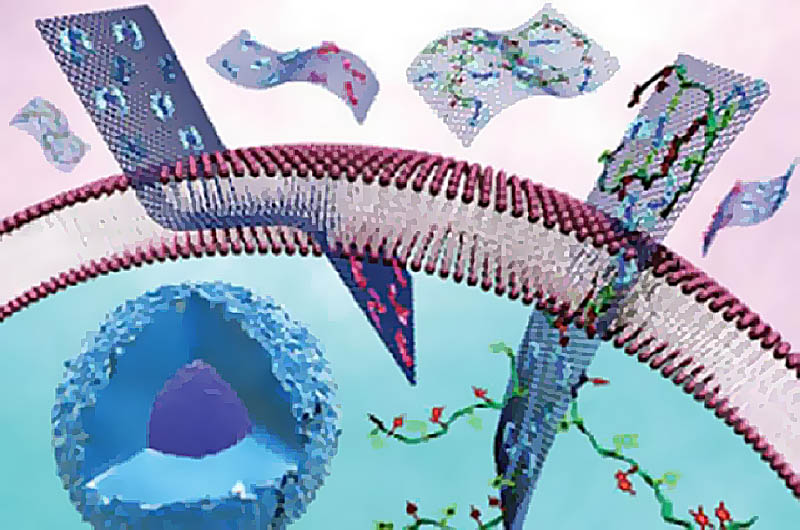
Manipulating the hydrophilic–lipophilic properties of graphene (blue hexagonal planes) through chemical modification would allow interactions with biological membranes (purple-white double layer), such as drug delivery into the interior of a cell (blue region) (Ref. doi:10.1038/nature11458 – A roadmap for graphene)
However, as most publications conclude, more pre-clinical studies and extensive clinical trials will be necessary to move this forward into the clinic to ensure patient benefit.
Research carried out in collaboration between University of Stavanger (UiS) and University of Bergen (UiB)demonstrated highly promising results for the use of CealTech’s graphene as a drug carrier in cancer treatment. Studies using leukemia and colorectal cancer cell models showed that the material is well suited for targeted delivery of chemotherapeutic and metabolism-modulating agents.
A key finding was that CealTech’s production method yields exceptionally pure graphene, free from contaminants, making it particularly suitable for medical and potential clinical applications. The results support the use of CealTech’s graphene as a medical-grade platform for advanced drug delivery solutions.