Graphene-based nanomaterials used as additive in electrodes for Lithium-ion batteries (LIB) hold the promise of great improvements. In this regard, CealTech is developing new graphene-enhanced electrodes with a view to improving thermal and electrochemical performance (capacity, fast-charging ability, life-cycle) and safety (reduced overheating) of LIB.

To this end, CealTech is currently focusing on the integration of its own Plasma-Enhanced Chemical Vapor Deposition (PE-CVD) graphene as an additive in both cathode and anodes, as well as developing new graphene-enhanced components for the next generation of commercial LIB.

Our PE-CVD graphene is especially suited to enhance thermal and electrochemical properties of electrode-based energy devices, where its purity, electronic properties, and mechanical strength are comparable to that of pristine graphene. Additionally, the PE-CVD graphene production technique is fully scalable, thus enabling a reliable and cost-effective supply of graphene material to the battery industry.

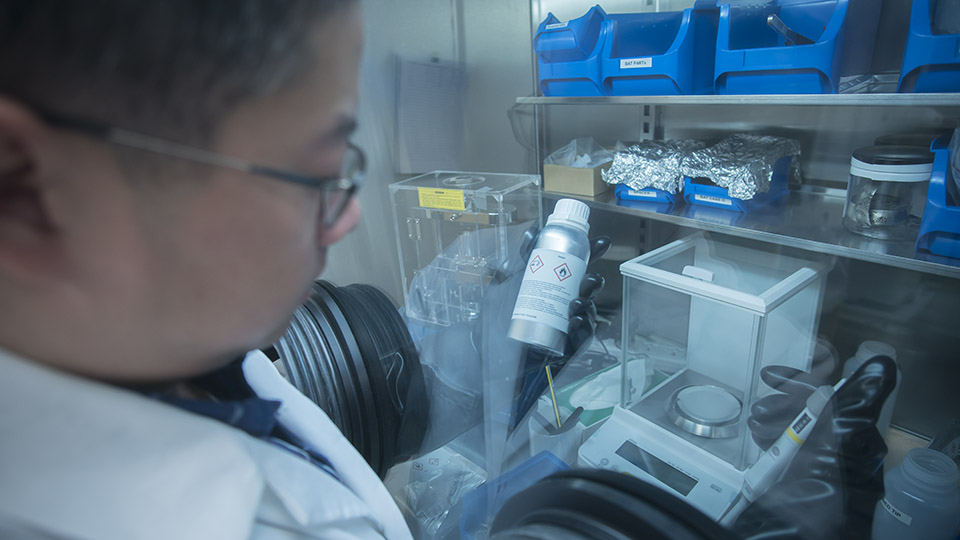
To pursue the development of our battery technology and demonstrate its commercial potential, we have established a state-of-the-art battery lab equipped with all necessary apparatus for producing and characterizing coin cell batteries. The installation of our battery laboratory was completed in summer 2017, and the development work has already commenced, including benchmarking the electrochemical performances of the developed batteries against conventional LIB technology and other graphene additives currently available on the market. To support this project, we are also benefitting from the expertise of several industrial and academic collaborators.
 

If you have any questions, or perhaps have similar or complementary interests, please contact sales@cealtechdev.wpengine.com We are always interested in new collaborations with both industry partners, and academic institutions.
The example above shows how functionalization prevented agglomeration after mixing, and ensured high compatibility of functionalized graphene in the mixture.


Introduction
Functionalization of graphene – along with its subsequent dispersion – is paramount, as it makes graphene (more) adaptable for a lot of application. For example, we cite that both covalent and non-covalent techniques are very effective in making graphene readily usable and ‘processable’.

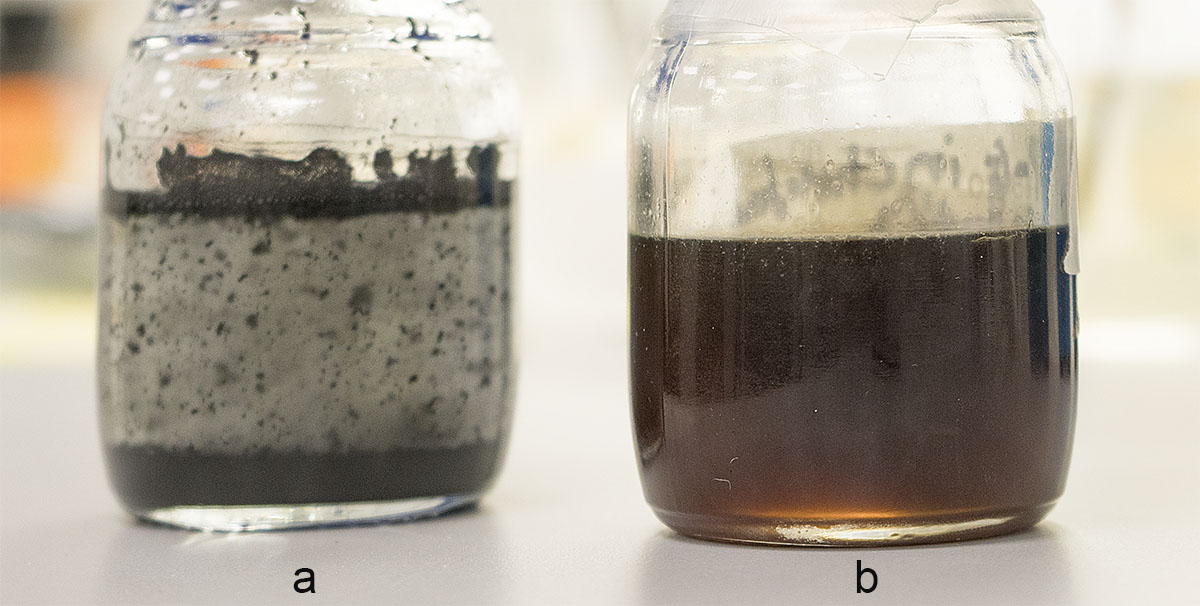
The figure above shows (a) the result of hand-mixing graphene and a macromolecular plasticizer (for elastomer) in solution, where graphene particles fail to disperse and begin to deposit after only few minutes/hours; and (b) graphene homogeneously and stably dispersed in solution after it was chemically functionalized with the same plasticizer, where no particles deposit are visible after one year (at time of this writing), and still counting.


What can CealTech offer you?
We can provide various ways to functionalize graphene and graphene derivatives depending on your material and your industrial process, thus expanding the number of potential application for graphene-based materials.

We can functionalize graphene both non-covalently or covalently to make graphene-bearing, to name but a few:
• Hydrogen, halogen, nitrogen, boron and other elements;
• Amine, isocyanate, hydroxyl, epoxy, carboxyl and other groups;
• Radicals for insitu polymerization;
• Organic molecules;
• Macromolecules/polymers;
• Metal/metal oxide nanoparticle, nanowire and other material, such as other carbon nanostructures (C60, CNT).


The potential applications of functionalized graphene include for example:
• Composites, elastomers, paints and coatings;
• Electronics: flexible electronics-transparent conductive coating, touch screen displays, electronic paper, organic light-emitting diodes (OLEDs), high-frequency transistors, and logic transistor;
• Photonics: photodetectors, optical modulator, and optical polarization controller;
• Energy generation and storage: battery, supercapacitor, fuel cell, and solar cell;
• Sensors and metrology;
• Medical: drug delivery, biosensor, bio-imaging and others;
• Green chemistry: water remediation, CO2 capture, ultrafiltration;

In addition to other applications, such as: catalysts, lubricants, nano-antennas, coolant additives, thermal management, anti-fouling, corrosion resistance, electromagnetic shielding, and structural material.


For more details, contact sales@cealtechdev.wpengine.com

CealTech has announced successful completion of phase #1 of a Client project, aimed at developing a Graphene-based coating for anti-corrosion of steel.


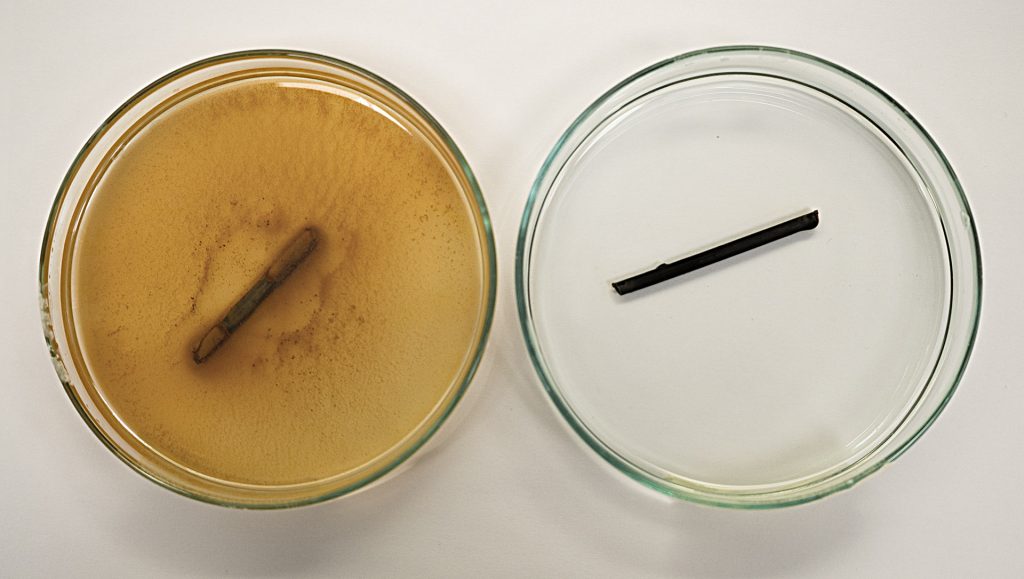
The project deliverables included preparing test samples using three different coating solutions, according to the project scope as defined with the Client. While the test samples will undergo extensive proof-testing by the Client, preliminary testing led by CealTech showed promising results as shown in the figure below.


Uncoated vs. Coated steel wire in corrosive environment solution after 30 days.


The next phase of the project will include testing additional methods, and further process optimization.

For more details, contact sales@cealtechdev.wpengine.com

Stavanger, Norway – CealTech AS has appointed Tor Morten Osmundsen as Chairman of the Board of Directors and Interim Chief Executive Officer, effective from August the 1st, 2017.


Mr. Osmundsen has 35 years of international business experience at top management level within the Oil & Gas, Medical and Industry Automation sectors.  He holds several Company Board positions.


“CealTech is an exceptional company with a great future”, said Mr. Osmundsen. “It is an honor to accept the Board’s appointment. We will be working during the coming months to revitalize the business, develop partnerships and to identify the right leadership for CealTech as it enters its next phase of value creation.”


The Board welcomes Mr. Osmundsen in his new roles. His leadership will be invaluable to the Board and senior management team to realize CealTech’s plan to launch its commercial graphene production, while contributing to the global graphene commercialization journey, and supporting its Clients’ business goals by helping them gain a competitive edge in their respective markets.

Want to learn more about our production technique? Watch this video with Prof. Nai-Chang Yeh.


Yeh’s principal research field is experimental condensed matter physics, with special emphasis on correlated electrons, topological matter, spintronics, low-dimensional materials, nanoscience and nanotechnology, energy research, and precise measurements using superconducting technology. Yeh received her B.Sc. degree in physics from the National Taiwan University in 1983 and Ph.D. degree in physics from the Massachusetts Institute of Technology in 1988. She joined the physics faculty of Caltech in 1989 and tenured as an associate professor in 1995, and promoted to full professorship in 1997. She is the first woman professor tenured in physics at Caltech, and is an elected fellow of the American Physical Society and the American Association for the Advancement of Science in the US and also an elected fellow and chartered physicist of The Institute of Physics in UK. This talk was given at a TEDx event using the TED conference format but independently organized by a local community.

Watch David Boyd perform “Graphene: Advancing Opportunities

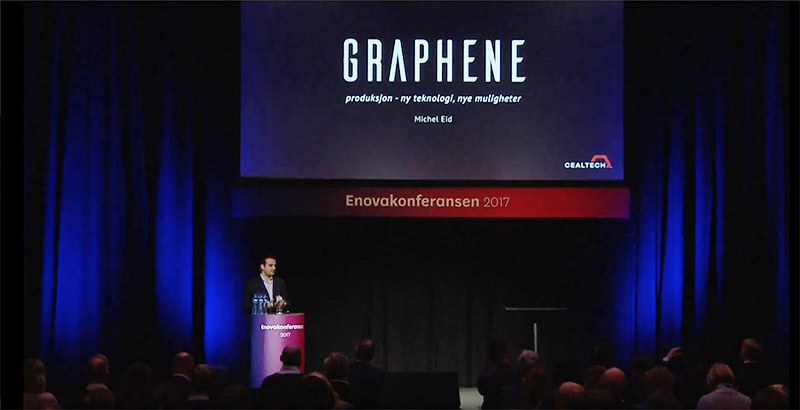
Michel Eid, our sales manager, presented Graphene and CealTech at the annual Enova conference. Link to the presentation and video here.

By enabling high quality graphene at industrial scale, a wealth of applications is finally possible. These include, to name but a few, batteries, composites and coatings with enhanced mechanical and electrical performance, biomedical sensors, transistors, supercapacitors, printed electronics, and transparent conductors.


More specifically, CealTech sees the use of graphene, for example as a conductive nano-filler in the preparation of inorganic/polymer nanocomposites, as a solution that can benefit the Wind Energy Industry to overcoming problems strictly connected to the wind turbine structures, such as electrical conductivity and thus lightning strike protection. In addition, graphene, owing to its barrier properties, can enhance the anti-corrosion properties of the resin, since it absorbs most of the light and provides hydrophobicity for repelling water. It is noteworthy to mention that all these improvements can be realized even at very low filler loadings in the polymer matrix; accordingly, a very small amount of graphene can significantly improve the physical properties of neat polymers.


Furthermore, CealTech expects the impact of graphene-based composites and coatings to reverberate throughout countless industries, enhancing performance and increasing application possibilities. For example, the use of graphene in paints and coatings can address market’s needs, such as anti-fouling coatings for boats and fish farms, solar paints to absorb and transmit solar energy, paints that provide insulation for houses, anti-rust coatings, etc.


Battery technology is yet another area of application, where graphene-based batteries are set to iron out the current “bugs” of for example Li-ion batteries, by providing a safer and more cost-effective battery with outstanding specific energy, quicker charge rate, and superior cyclic stability. This new battery technology will accelerate the electrification of Transportation Industry, while meeting the increasing market demand for energy storage (i.e. smart-grid structure) and power consumption.


Moreover, graphene is the best candidate to achieving both targeted and controlled drugs deliveries alike, pending the proof of its biocompatibility. Among the medical applications that can leverage the unique properties of graphene are cancer and gene therapies, where graphene-based nanomaterials functionalized with known biopolymers can be successfully loaded with several drugs to achieve a precise targeted treatment. Poorly soluble substances can then be conjugated with graphene, and its derivatives, to increase their solubility and stability without losing their efficiency. Other medical applications which graphene can benefit include, to name but a few: diagnostics and biosensors; tissue engineering; and biomarker.


Graphene has also a wide number of potential applications in the Defense industry, such as advanced camouflage systems, and lighter yet stronger ballistic protections. By doping graphene, it is also possible to develop graphene enhanced perovskite and DS solar cells. Furthermore, a graphene-modified drilling fluid will only revolutionize the drilling industry, resulting in safe, more cost-effective and more environmentally drilling operations, in addition to reduced flow friction, and lower power requirements to drive the pumps. Lastly, one can cite all the benefits graphene and graphene-enabled products can bring to the Aerospace industry, in terms of improved mechanical properties, reduced weight, extended lifetime, better insulation and most importantly increased safety.


The future is already here. Let’s embrace it!

Since its inception in 2012, CealTech has sought to be an industry leader of high quality graphene at industrial scale,, thereby to unlock graphene full potential. Towards this end, CealTech has entered a global, strategic collaboration agreement with Caltech (California Institute of Technology) focused on the research and development of graphene and utilizing Caltech’s patented graphene production technique (issued US patent 9,150,418). The Collaboration and License Agreement was made effective as of the 15th day of June, 2016 and grants CealTech exclusive rights for use of the patented technique into its own graphene production unit, FORZATM (patent pending), which has the potential to produce graphene at large scale and competitive price, with effective yields and a purity sufficient so as not to impair graphene’s desired chemical properties.


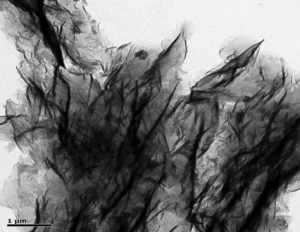
The backbone of CealTech’s graphene production method is the Plasma Enhanced Chemical Vapor Deposition (PE-CVD) technique. The purity, electronic properties, and mechanical strength of the PE-CVD graphene is comparable to those of pristine graphene. In addition, CealTech’s unique method enables short production time, reduced process temperatures, single-step processing (e.g. continuous production), superior control over the number of produced layers, and the ability to directly functionalize the graphene per the intended application without any chemical modification. The TEM (Transmission Electron Microscope) image in the figure below highlights the unique structure of CealTech’s 3D graphene, which offers better bonding with the surrounding matrix, hence improving the interfacial load transfer.


TEM image of CealTech’s 3D graphene.


First trials

As a startup trial, CealTech have started to grow 16 different types of graphene (pure as well as functionalized), by alternating the process settings. Although we acknowledge that further optimization is still required, it is reasonable to say that the results obtained thus far are beyond encouraging, where our unique production method can enable direct tailoring of the graphene (i.e. group-functionalization) to suit the specificities of the intended applications, and this without requiring any chemicals.