By enabling high quality graphene at industrial scale, a wealth of applications is finally possible. These include, to name but a few, batteries, composites and coatings with enhanced mechanical and electrical performance, biomedical sensors, transistors, supercapacitors, printed electronics, and transparent conductors.


More specifically, CealTech sees the use of graphene, for example as a conductive nano-filler in the preparation of inorganic/polymer nanocomposites, as a solution that can benefit the Wind Energy Industry to overcoming problems strictly connected to the wind turbine structures, such as electrical conductivity and thus lightning strike protection. In addition, graphene, owing to its barrier properties, can enhance the anti-corrosion properties of the resin, since it absorbs most of the light and provides hydrophobicity for repelling water. It is noteworthy to mention that all these improvements can be realized even at very low filler loadings in the polymer matrix; accordingly, a very small amount of graphene can significantly improve the physical properties of neat polymers.


Furthermore, CealTech expects the impact of graphene-based composites and coatings to reverberate throughout countless industries, enhancing performance and increasing application possibilities. For example, the use of graphene in paints and coatings can address market’s needs, such as anti-fouling coatings for boats and fish farms, solar paints to absorb and transmit solar energy, paints that provide insulation for houses, anti-rust coatings, etc.


Battery technology is yet another area of application, where graphene-based batteries are set to iron out the current “bugs” of for example Li-ion batteries, by providing a safer and more cost-effective battery with outstanding specific energy, quicker charge rate, and superior cyclic stability. This new battery technology will accelerate the electrification of Transportation Industry, while meeting the increasing market demand for energy storage (i.e. smart-grid structure) and power consumption.


Moreover, graphene is the best candidate to achieving both targeted and controlled drugs deliveries alike, pending the proof of its biocompatibility. Among the medical applications that can leverage the unique properties of graphene are cancer and gene therapies, where graphene-based nanomaterials functionalized with known biopolymers can be successfully loaded with several drugs to achieve a precise targeted treatment. Poorly soluble substances can then be conjugated with graphene, and its derivatives, to increase their solubility and stability without losing their efficiency. Other medical applications which graphene can benefit include, to name but a few: diagnostics and biosensors; tissue engineering; and biomarker.


Graphene has also a wide number of potential applications in the Defense industry, such as advanced camouflage systems, and lighter yet stronger ballistic protections. By doping graphene, it is also possible to develop graphene enhanced perovskite and DS solar cells. Furthermore, a graphene-modified drilling fluid will only revolutionize the drilling industry, resulting in safe, more cost-effective and more environmentally drilling operations, in addition to reduced flow friction, and lower power requirements to drive the pumps. Lastly, one can cite all the benefits graphene and graphene-enabled products can bring to the Aerospace industry, in terms of improved mechanical properties, reduced weight, extended lifetime, better insulation and most importantly increased safety.


The future is already here. Let’s embrace it!

Since its inception in 2012, CealTech has sought to be an industry leader of high quality graphene at industrial scale,, thereby to unlock graphene full potential. Towards this end, CealTech has entered a global, strategic collaboration agreement with Caltech (California Institute of Technology) focused on the research and development of graphene and utilizing Caltech’s patented graphene production technique (issued US patent 9,150,418). The Collaboration and License Agreement was made effective as of the 15th day of June, 2016 and grants CealTech exclusive rights for use of the patented technique into its own graphene production unit, FORZATM (patent pending), which has the potential to produce graphene at large scale and competitive price, with effective yields and a purity sufficient so as not to impair graphene’s desired chemical properties.


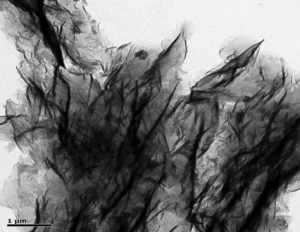
The backbone of CealTech’s graphene production method is the Plasma Enhanced Chemical Vapor Deposition (PE-CVD) technique. The purity, electronic properties, and mechanical strength of the PE-CVD graphene is comparable to those of pristine graphene. In addition, CealTech’s unique method enables short production time, reduced process temperatures, single-step processing (e.g. continuous production), superior control over the number of produced layers, and the ability to directly functionalize the graphene per the intended application without any chemical modification. The TEM (Transmission Electron Microscope) image in the figure below highlights the unique structure of CealTech’s 3D graphene, which offers better bonding with the surrounding matrix, hence improving the interfacial load transfer.


TEM image of CealTech’s 3D graphene.


First trials

As a startup trial, CealTech have started to grow 16 different types of graphene (pure as well as functionalized), by alternating the process settings. Although we acknowledge that further optimization is still required, it is reasonable to say that the results obtained thus far are beyond encouraging, where our unique production method can enable direct tailoring of the graphene (i.e. group-functionalization) to suit the specificities of the intended applications, and this without requiring any chemicals.

To recap, Graphene has extraordinary material properties including an ultimate tensile strength of 130 gigapascal, an electron mobility of 15,000 cm2.V-1.s-1, a thermal conductivity between 2000–4000 W m-1K-1 and an optical transparency of 97.7%. (Fullerex Report, 2017).


These unique properties explain the proliferation of production processes that have been developed in an attempt to create this paradigmatic material, resulting in the emergence of a broad spectrum of graphene-based materials. These materials range from a single layer of carbon atoms to those comprising tens or even hundreds of layers in a stack, essentially Nano-graphite.


While the strict definition of graphene is that of a monolayer material, generally, the thicker the graphene material the less exceptional its properties become. Accordingly, as one moves from multi-layer to monolayer across the broad range of graphene materials, the overall mechanical and conductive properties of the material increase, as well as surface area per unit weight and overall cost and time to produce. In addition to the number of layers, there are also significant property changes that arise from any intrinsic defects in the crystalline structure (dislocations, tears and grain boundaries), and/or extrinsic defects (chemical impurities such as foreign atoms), where such defects limit the benefits of using graphene.


The ‘holy grail’, therefore, is the ability to produce industrial volumes of pristine single-layered (or very few-layered) sheets of graphene for a reasonably low cost.

In our humble opinion:

  1. One layer is true graphene (the real deal);
  2. 2 to 10 Layers is multilayer graphene;
  3. More than 10 layers is actually graphite.


But, why is multilayer graphene not as good as people think? 

If you can imagine a “small” deck of cards, say up to ten cards, you bond the upper and lower cards, but as you bend the deck, the intermediate layers (i.e. individual cards) can easily separate due to the weak Van der Waals forces, resulting in weakness in the matrix. In contrast, if you take one-layer sheet of graphene, while the graphene layer can still bend, the matrix however remains stable.


In order to attach graphene to a matrix (almost any sort of matrix), you simply need to add defects/active groups on the graphene to create bonding sites. In this regard, the words doped/doping, as in doped graphene or graphene doping, commonly refer to adapting the graphene structure to make a binding on either the plane or edges of the graphene. The binding can be in forms of functional groups or defects, including, but not limited to, oxygen functional groups, which can act as active sites for interaction with many different gas molecules or chemicals.

Carbon has some properties that makes it special: it tends to form covalent bonds, and it prefers to have four of them. Note that the carbon-carbon bonds are record strong (not to be confused with hardness), which certainly paves the way to a lot of weary interesting combinations, as illustrated by many allotropes of carbon (probably more than in any other element) and the immense diversity of organic chemistry.


Graphene has much of its high strength thanks to the 2-D layer structure of carbon atoms. In contrast, Graphite does not have interconnected crystal structure – nor 3-D lattice bonds such as a diamond. Graphite is composed of stacked layers of graphene sheets, which are held together by the weak Van der Waals forces, including attraction and repulsions between atoms, molecules, and surfaces, as well as other intermolecular forces.


But before we go any further, here are some information to remember:

  1. Amorphous carbon: undefined ratio between sp2 and sp3 bonds arranged in an irregular configuration, making it mechanically weak in every direction.
  2. Diamond: sp3 bond forming three-dimensionally crystalline structure, not flexible but mechanically strong. Hard and not flexible mean brittle, that is cannot absorb the exterior force energy.
  3. Graphene: sp2 bond forming a planar 6 rings configuration, making it strong in the direction of the plane of rings, but relatively weak between planes. The pi electrons are free and delocalized across the carbon plane.


The reason the sp orbitals form is to allow the carbon to bond easier with less repulsion between electrons in each of the orbitals. What this means is that carbon’s orbitals change shape to make the carbon “happy”! This is called the hyper conjugation effect. Hyper conjugation can be called the stabilizing interaction that results from the interaction of the electrons in a σ-bond (usually C-H or C-C) with an adjacent empty or partially filled p-orbital or a pi-orbital to give an extended molecular orbital that increases the stability of the system. Hyper conjugation is a factor explaining why increasing the number of alkyl substituents on a carbocation or radical center leads to an increased stability.


When we discuss the “strength of a material”, we refer to the force it takes to break apart the bond between two lattice atoms. While the actual strength of impure graphene is reduced due to voids, dislocations, etc. and can be 2 to 3 times weaker than the theoretical strength, it can be understood that the strength of a nearly flawless graphene can effectively reach its theoretical value.

Graphene is a 2-dimensional, crystalline allotrope of carbon, and can be described as a one-atom thick layer of graphite. In graphene, carbon atoms are densely packed in a regular sp2-bonded atomic-scale chicken wire (hexagonal) pattern. Never mind what sp2-bond means, it is the structure of graphene which gives it much of its unique properties, and makes graphene the “wonder-material”.


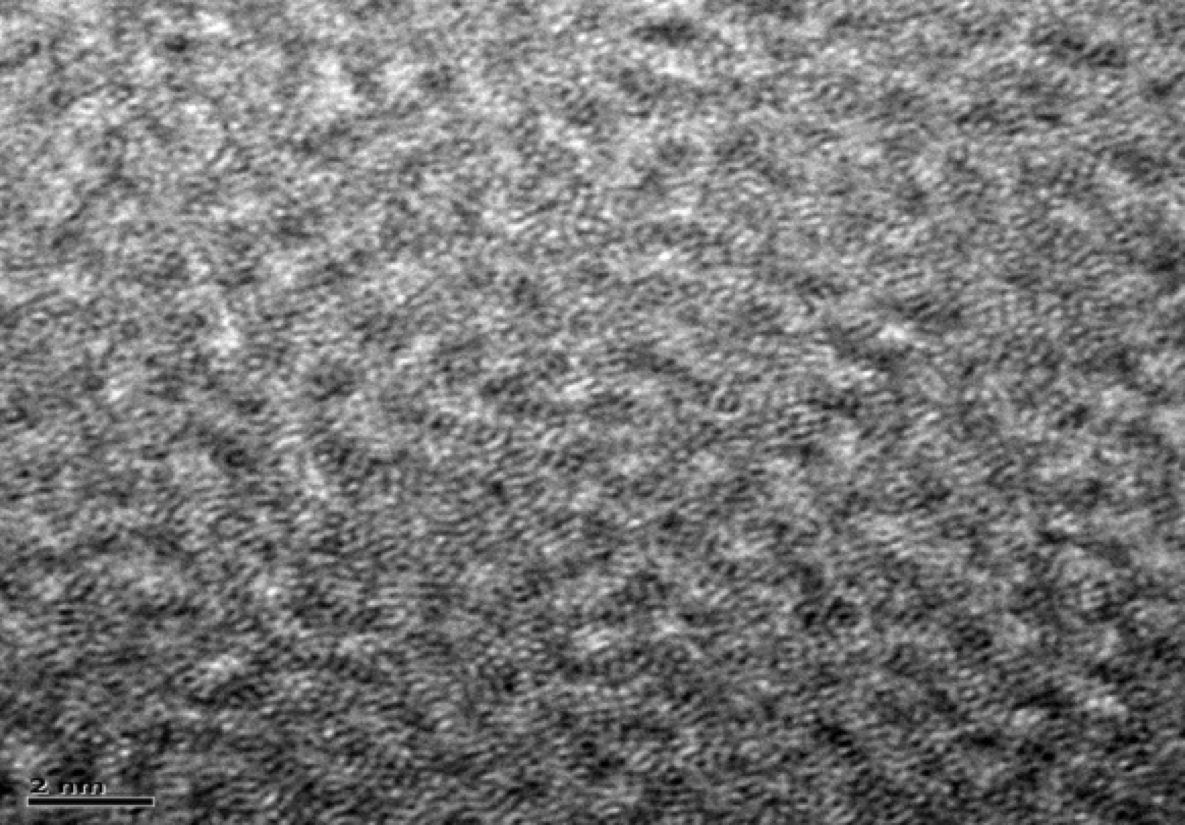
Here is a bunch of actual carbon atoms: if you squeeze your eyes you can see the individual atoms!!


Ever since its discovery, Graphene has not stopped to impress the world with its properties, and potential areas of application. Graphene is 200 times stronger than steel, and harder than diamond, yet the lightest material known to man. It is highly flexible and can take (almost) any form. Graphene is nearly transparent, conducts electricity much better then copper, and has excellent biocompatible properties. Researchers have also identified the bipolar transistor effect, ballistic transport of charges and large quantum oscillations in graphene.


Where do these properties come from?

So, let’s start with some basics. Graphene is one single atom thick carbon. Carbon is the 15th most abundant element in the Earth’s crust, and the fourth most abundant element in the universe by mass after oxygen, helium, and hydrogen. What this effectively means is that carbon compounds form the basis of all known life on Earth.


Carbon is the sixth element, with a ground-state electron configuration of 1s22s22p2, of which the four outer electrons are valence electrons. About anything entirely made of carbon atoms has a tendency to be incredibly strong, beyond just about anything else known to material science. Moreover, it doesn’t seem to matter too much how the carbon is arranged; whether it’s a tetrahedral crystal lattice (diamond), or a hexagonal 2D lattice (graphene), real pure carbon seems to be magically super-strong in just about any configuration, except for graphite the mother of graphene!?!

Photo: Courtesy University of Manchester.

The story of graphene goes back to some 158 years ago, where in 1859, Sir Benjamin Collins Brodie described the highly lamellar structure of thermally reduced graphite oxide. But it wasn’t until 1916 that the structure of graphite was first discovered, and not until 1947 for P. R. Wallace to consider the theoretical existence of graphene. The arrival of electron microscopy in 1948 gave the world the first images of few-layers graphite, closely followed by the observation of single graphene layers by Ruess and Vogt. Since then, the pursuit of “isolating graphene” started, and it wasn’t until 2004 that Prof. Andre Geim and Prof. Constantine Novoselov were able to “pull” graphene layers from graphite, a discovery which earned them the Nobel prize in 2010.