CealTech’s marketing and sales manager explains the company’s technology and business
Norway-based CealTech was established in 2012 to commercialize a patented 3D graphene production method. The company recently received its first prototype proprietary industrial-scale Plasma-Enhanced Chemical Vapor Deposition (PE-CVD) graphene production reactor.
We discussed CealTech’s technology and business with the company’s marketing and sales manager, Michel Eid. Michael holds a Ph.D. in Solid Mechanics from the Ecole Polytechnique in France, and held various roles in engineeing, manufacturing, sustaining, sales, marketing and business development. Michel joined CealTech in January 2017.
Q: Hello Michael. CealTech is commercializing a patented 3D graphene production method. Can you give us some details on the process and the material you are producing?
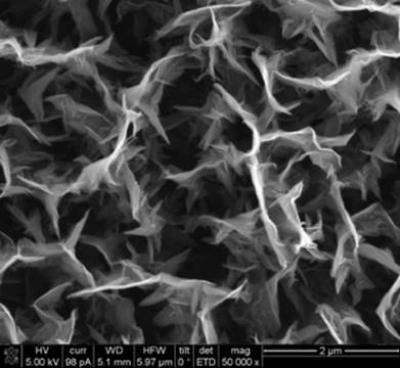
Our production process is based on David Boyd’s technique as per Nature communications (DOI: 10.1038/ncomms7620), ‘Single-step deposition of high-mobility graphene at reduced temperatures’. In summary, the substrate is directly exposed to a low-pressure, microwave hydrogen plasma containing small amounts of methane as carbon source. During this process, vertical grown graphene flakes nucleate and arrange perpendicularly to the surface of the substrate forming a so-called 3D network of non-agglomerated graphene flakes.
It is worth mention that this process occurs within a few minutes. Critical parameters in this process to control the quality of the 3D graphene are rotation speed of the substrate (this determines the number of layers), the microwave frequency and plasma intensity, and gas flow in the reactor. All in all, this enables superior control over the number of produced layers, the flake size, and the ability to directly functionalize the graphene directly inside the reactor per the intended application without any additional chemical treatment.
Q: How does your graphene materials compare to other graphene flake materials on the market? Or should we compare your graphene to CVD graphene materials?
Our graphene can be compared with CVD grown graphene. The purity, electronic properties, and mechanical strength of the PE-CVD graphene are in fact comparable to those of pristine graphene – where the strict definition of graphene is that of a monolayer material. Vertically grown graphene owns a number of unique features compared to other graphene types such as, to name but a few: the vertical orientation, the low degree of agglomeration of the graphene flakes, controllable number of layers, very high volume to surface ratio and the ultra-thin and reactive edges of the flakes. Our ultimate goal is to grow few- to very few-layered, high purity graphene, and this is the target we are setting for ourselves during the optimization phase of our prototype production unit, which will start in January 2018.
Q: CealTech announced it will start mass producing graphene in early 2017. Are you mass producing graphene today?
The answer to this is, ‘No’. This said, the initial plan was however to mass produce graphene around Q3/Q4 of 2017, and it is fair to stay that we are behind what we first announced. I can mention that the delays were somehow ‘intentionally planned’, that is the results of our decision to extend the functional testing phase of our production unit (from what was initially planned), where the focus was to ensure that the unit is fully operational before it is delivered to us.

Our production unit is currently being installed in our facility in Stavanger, Norway, and in January 2018, we will start the optimization phase, where the production parameters will be fine-tuned to ensure consistent and effective production of CealTech’s high quality 3D graphene. I would like to mention that, the quality of the graphene we produced during the functional testing phase of our production unit, is not too far from the target we have set. There is still some way to go, but we are confident we’ll get there.
Q: CealTech currently addresses three major markets: Healthcare, Composite and Energy storage. Can you detail your development and business efforts in these three important areas?
On the Healthcare, we are collaborating with the University of Stavanger and the University of Bergen in Norway, to investigate the use of our graphene as drug carrier for treatment of cancer. The research project includes In-vitro and In-vivo assessment, in addition to evaluating the non-toxicity of our graphene and its usefulness for cancer treatment, while leveraging the uniqueness of our production technique, which enables tailoring the particles and doping them for optimal drug conjugation. We will have a project meeting with all the parties involved in January 2018, and will probably have some update on the project development by then. In the meantime, more information on the project can be found here.
On the Energy Storage, the long-term objective of the project is realizing an advanced graphene-enhanced lithium-ion battery (LIB) with improved performance compared to conventional batteries, where graphene is expected to improve critical properties of LIB such as energy density, power density and cyclic performance as well as operational safety. We are currently focusing on the integration of our graphene as an additive in both cathode and anodes, as well as developing new graphene-enhanced components for the next generation of commercial LIB. We will have more update on this project soon; in the meantime, you can find more information about the project here.
Regarding Composites, this includes several projects, all of which are Client projects. Among them: graphene-based anti-corrosion coating, where our internal testing showed very positive results, while the samples prepared during phase #1 of the project are currently being tested by the client. In addition, we are working on: graphene-based elastomers, paints, isolation materials, fiberglass, epoxies and resins, where we are putting in practice our expertise in graphene functionalization and dispersion to improve not only the performance of the respective products for example, in terms of mechanical, electrical and thermal properties, but also the associated (manufacturing) process, in terms of reduced curing time, better flowability of the masterbatch, etc. The project development activities are for the most done in our labs, and where applicable, involves some of our research partners’, including Caltech (USA), FORTH (Greece), and various Norwegian research institutes including: SINTEF, IFE, IRIS and UiS, etc. We will have more updates on all of the above activities soon.
Q: Where do you see the graphene market in 3-5 years? What role will CealTech take?
It is only reasonable to expect the market to grow further, and to see more graphene-based commercial products, as the barriers, which are currently slowing the industrial adoption of graphene, will be (eventually) addressed by then. Our role is, and will be, consistent with our mission, that is, contributing to unlocking graphene’s full potential, by producing graphene, and graphene derivatives (e.g., nano-intermediates), while developing and commercializing graphene-based products, and supporting ongoing initiatives (e.g., standardization, addressing health and safety issues) that are aimed at accelerating the widespread industrial uptake of graphene.
Q: What is the most exciting graphene application for you personally? And why?
I hope you accept that I mention two applications, instead of one.
The first is the use of graphene in anti-cancer treatment, especially when considering graphene’s potential to address the urging needs on the oncology market, as cancer is (becoming) one of the leading causes of health loss worldwide, and not the least, a significant financial burden on all societies.
The second has to do with water filtration, including graphene’s potential to provide drinkable water to the world. In this respect, it is both fascinating and inspiring to read about all the efforts in the market, especially by the University of Manchester. Water filtration is an area that interests us a lot at CealTech; so, stay tuned on this one as well!
Thank you Michel for this interview, I wish both you and CealTech the best of luck!