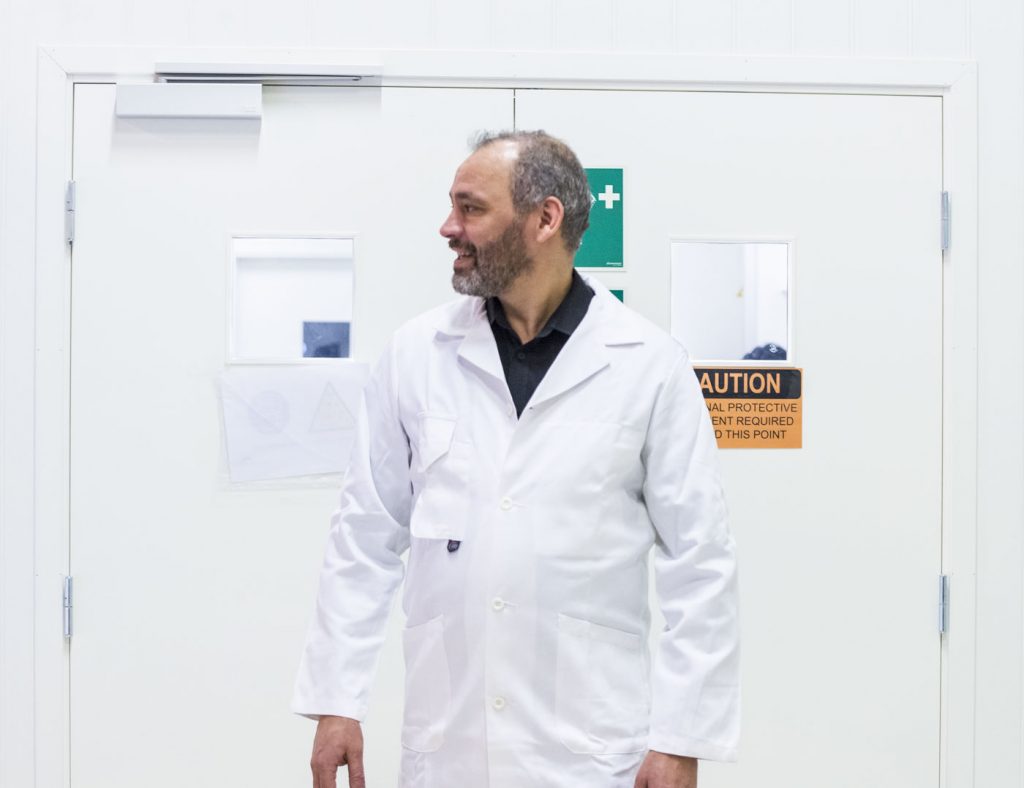
Jon Are Beukes joins CealTech as Chief Scientific Officer to further strengthen our ability to commercialize the applications of graphene in new materials.


– I have a life-long burning passion for working with and developing advanced materials, and I am excited for the opportunity to work with graphene application in a fast-moving and dynamic environment, Dr Beukes says.


– His experience is unique


Having Dr Beukes join our team is a critical part of our continued commitment to deliver world-leading R&D services in creating tangible graphene products.


His background is a perfect fit for CealTech, with his combined experience of leading R&D processes, proven innovation track record and strong scientific competence in plasmas.


His experience within research and practical usage of plasma technologies is unique, CEO Stian Anke-Hansen says, before adding:
– We cannot wait to see him use his extensive experience to boost our fantastic science team and customers’ products.


Dr Beukes comes to CealTech from Schenck Process, where he has held the position as Application Manager for 5 years. Before that he was Director R&D for 6 years in Applied Plasma Physics until Schenck Process acquired the company in 2014. He also has extensive research experience from:

  • European Synchrotron Radiation Facility (ESRF)
  • Norwegian University of Science and Technology (NTNU)
  • University of Oslo (UiO)
  • University of Copenhagen (KU)

In addition, Dr Beukes holds a Dr. Scient. in Atmospheric Chemistry from the University of Oslo, and he has eleven years of experience commercializing plasma reactors.


Motorcycles and martial arts

On his free time, you are likely to find Dr Beukes riding his motorcycle, which is one of his great passions. Moreover, if you are interested in Japanese martial arts, you can learn a thing or two from him; he is indeed a former Norwegian judo champion.


When it comes to the legacy of his work, Dr Beukes has a clear vision:


– I dream of one day enabling a real sized space elevator.

A team of researchers at MIT, Raytheon BBN Technologies and Columbia University have used graphene to design a fast yet highly sensitive bolometer that can work at room temperature and may even be less expensive. Bolometers are devices that monitor electromagnetic radiation through heating of an absorbing material. Most such devices have limited bandwidth and must be operated at ultralow temperatures, which damages their usefulness.

Researchers at MIT and Israel’s Technion have used graphene to devise a new way of enhancing the interactions between light and matter, in a work that could someday lead to more efficient solar cells that collect a wider range of light wavelengths, and new kinds of lasers and light-emitting diodes (LEDs) that could have fully tunable color emissions.

Many people will have heard of graphene, even if they don’t know exactly what it is. Graphyne, on the other hand, is not as well known. In this article, we look at what both of these materials are and what beneficial properties they exhibit. This article also looks at the difference between these interesting materials.

I earned my Doctoral degree in Chemical Engineering at the Norwegian University of Science and Technology (NTNU) in Norway. Prior to joining CealTech, I worked first as a Material Engineer, with specialty in Polymer Nanocomposite Material, then I worked as a Chemical Engineer, and had as research task the ‘development of gravel pack for oil and gas production using expandable polymer material’. In 2016, I started working as R&D Chemist at CealTech, and since have been focusing my research activities on graphene, and graphene derivatives, and related applications, such as: composites, elastomers, paints/coatings, corrosion resistance, antifouling, electromagnetic shielding, etc.


What I like about my job at CealTech?
Mostly the work environment! I also enjoy the fact that I can develop and fulfill my research interests, in that graphene gives me the opportunity to work on polymer composite, paint, elastomers, organic and inorganic nanomaterials, catalysts, etc.


What I like to do in my free time?
I like watching and playing football and table tennis. I also like movies and music.

I obtained a bachelor of Science degree in Polymer Science and Engineering from Wuhan University of Technology in China. I then continued studying and researching in the field of polymers, in particular in conductive polymers, whereby I received a Master’s degree at the University of Manchester in UK. Afterwards, I started researching in Electrical Energy Storage (EES) devices – including supercapacitor and Li-ion battery – and earned my Doctoral degree at the Norwegian University of Science and Technology (NTNU) in Norway.

I believe EES is going to play a more significant role in our daily life – actually, it is already doing that – and I see that further advance in material science is one of the most important prerequisites to achieve this goal. Prior to joining CealTech, I had several years of work experience in R&D and product development from various industries.

What I like about my job at CealTech? to have the opportunity and challenge of working on cutting-edge technology, and to be researching in unknown and uncharted areas! But most importantly, I also enjoy having the support from a multicultural group of dedicated individuals with various talents.

What I like to do in my free time? I mostly like listening to music.

CealTech’s marketing and sales manager explains the company’s technology and business

Norway-based CealTech was established in 2012 to commercialize a patented 3D graphene production method. The company recently received its first prototype proprietary industrial-scale Plasma-Enhanced Chemical Vapor Deposition (PE-CVD) graphene production reactor.

We discussed CealTech’s technology and business with the company’s marketing and sales manager, Michel Eid. Michael holds a Ph.D. in Solid Mechanics from the Ecole Polytechnique in France, and held various roles in engineeing, manufacturing, sustaining, sales, marketing and business development. Michel joined CealTech in January 2017.


Q: Hello Michael. CealTech is commercializing a patented 3D graphene production method. Can you give us some details on the process and the material you are producing?

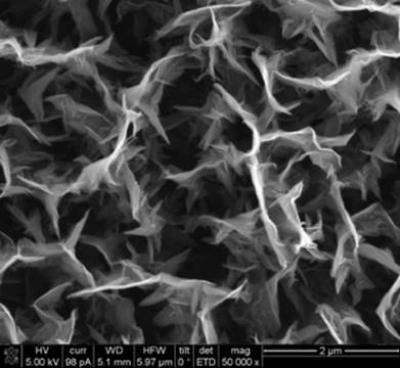
Our production process is based on David Boyd’s technique as per Nature communications (DOI: 10.1038/ncomms7620), ‘Single-step deposition of high-mobility graphene at reduced temperatures’. In summary, the substrate is directly exposed to a low-pressure, microwave hydrogen plasma containing small amounts of methane as carbon source. During this process, vertical grown graphene flakes nucleate and arrange perpendicularly to the surface of the substrate forming a so-called 3D network of non-agglomerated graphene flakes.

It is worth mention that this process occurs within a few minutes. Critical parameters in this process to control the quality of the 3D graphene are rotation speed of the substrate (this determines the number of layers), the microwave frequency and plasma intensity, and gas flow in the reactor. All in all, this enables superior control over the number of produced layers, the flake size, and the ability to directly functionalize the graphene directly inside the reactor per the intended application without any additional chemical treatment.


Q: How does your graphene materials compare to other graphene flake materials on the market? Or should we compare your graphene to CVD graphene materials?

Our graphene can be compared with CVD grown graphene. The purity, electronic properties, and mechanical strength of the PE-CVD graphene are in fact comparable to those of pristine graphene – where the strict definition of graphene is that of a monolayer material. Vertically grown graphene owns a number of unique features compared to other graphene types such as, to name but a few: the vertical orientation, the low degree of agglomeration of the graphene flakes, controllable number of layers, very high volume to surface ratio and the ultra-thin and reactive edges of the flakes. Our ultimate goal is to grow few- to very few-layered, high purity graphene, and this is the target we are setting for ourselves during the optimization phase of our prototype production unit, which will start in January 2018.
Q: CealTech announced it will start mass producing graphene in early 2017. Are you mass producing graphene today?

The answer to this is, ‘No’. This said, the initial plan was however to mass produce graphene around Q3/Q4 of 2017, and it is fair to stay that we are behind what we first announced. I can mention that the delays were somehow ‘intentionally planned’, that is the results of our decision to extend the functional testing phase of our production unit (from what was initially planned), where the focus was to ensure that the unit is fully operational before it is delivered to us.


Our production unit is currently being installed in our facility in Stavanger, Norway, and in January 2018, we will start the optimization phase, where the production parameters will be fine-tuned to ensure consistent and effective production of CealTech’s high quality 3D graphene. I would like to mention that, the quality of the graphene we produced during the functional testing phase of our production unit, is not too far from the target we have set. There is still some way to go, but we are confident we’ll get there.


Q: CealTech currently addresses three major markets: Healthcare, Composite and Energy storage. Can you detail your development and business efforts in these three important areas?

On the Healthcare, we are collaborating with the University of Stavanger and the University of Bergen in Norway, to investigate the use of our graphene as drug carrier for treatment of cancer. The research project includes In-vitro and In-vivo assessment, in addition to evaluating the non-toxicity of our graphene and its usefulness for cancer treatment, while leveraging the uniqueness of our production technique, which enables tailoring the particles and doping them for optimal drug conjugation. We will have a project meeting with all the parties involved in January 2018, and will probably have some update on the project development by then. In the meantime, more information on the project can be found here.

On the Energy Storage, the long-term objective of the project is realizing an advanced graphene-enhanced lithium-ion battery (LIB) with improved performance compared to conventional batteries, where graphene is expected to improve critical properties of LIB such as energy density, power density and cyclic performance as well as operational safety. We are currently focusing on the integration of our graphene as an additive in both cathode and anodes, as well as developing new graphene-enhanced components for the next generation of commercial LIB. We will have more update on this project soon; in the meantime, you can find more information about the project here.

Regarding Composites, this includes several projects, all of which are Client projects. Among them: graphene-based anti-corrosion coating, where our internal testing showed very positive results, while the samples prepared during phase #1 of the project are currently being tested by the client. In addition, we are working on: graphene-based elastomers, paints, isolation materials, fiberglass, epoxies and resins, where we are putting in practice our expertise in graphene functionalization and dispersion to improve not only the performance of the respective products for example, in terms of mechanical, electrical and thermal properties, but also the associated (manufacturing) process, in terms of reduced curing time, better flowability of the masterbatch, etc. The project development activities are for the most done in our labs, and where applicable, involves some of our research partners’, including Caltech (USA), FORTH (Greece), and various Norwegian research institutes including: SINTEF, IFE, IRIS and UiS, etc. We will have more updates on all of the above activities soon.


Q: Where do you see the graphene market in 3-5 years? What role will CealTech take?

It is only reasonable to expect the market to grow further, and to see more graphene-based commercial products, as the barriers, which are currently slowing the industrial adoption of graphene, will be (eventually) addressed by then. Our role is, and will be, consistent with our mission, that is, contributing to unlocking graphene’s full potential, by producing graphene, and graphene derivatives (e.g., nano-intermediates), while developing and commercializing graphene-based products, and supporting ongoing initiatives (e.g., standardization, addressing health and safety issues) that are aimed at accelerating the widespread industrial uptake of graphene.


Q: What is the most exciting graphene application for you personally? And why?

I hope you accept that I mention two applications, instead of one.

The first is the use of graphene in anti-cancer treatment, especially when considering graphene’s potential to address the urging needs on the oncology market, as cancer is (becoming) one of the leading causes of health loss worldwide, and not the least, a significant financial burden on all societies.

The second has to do with water filtration, including graphene’s potential to provide drinkable water to the world. In this respect, it is both fascinating and inspiring to read about all the efforts in the market, especially by the University of Manchester. Water filtration is an area that interests us a lot at CealTech; so, stay tuned on this one as well!


Thank you Michel for this interview, I wish both you and CealTech the best of luck!

 

Stavanger, Norway – December 5, 2017;

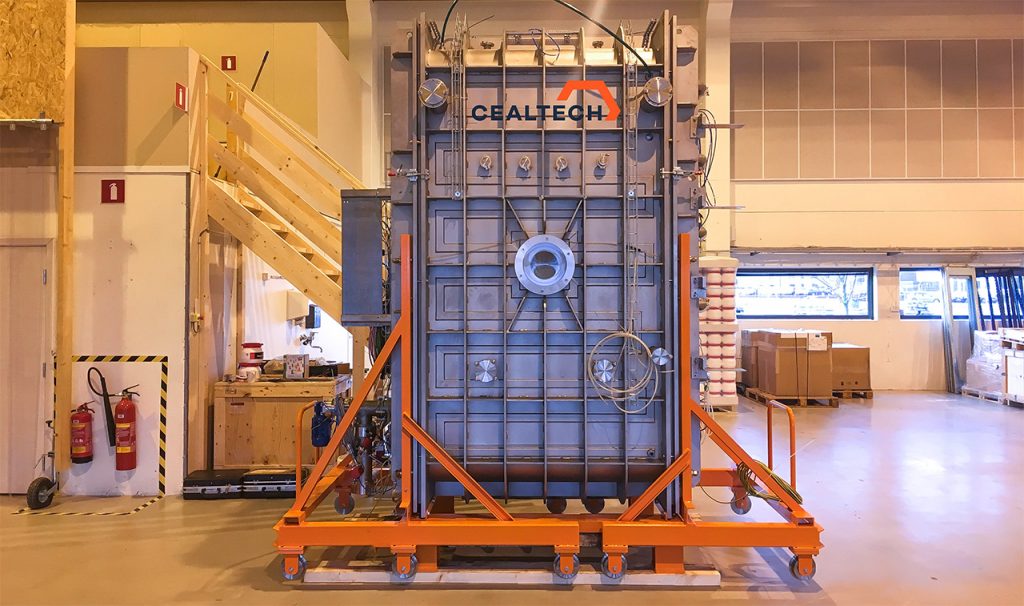
CealTech AS announced today that it received its first prototype graphene production unit (aka, FORZATM) on the 4th of December 2017. The FORZATM is essentially an industrial-scale, Plasma-Enhanced Chemical Vapor Deposition (PE-CVD) reactor. It is designed by CealTech, and is based on Caltech’s patented PE-CVD production technique, which CealTech holds the exclusive right for use.

“This is history in the making; a milestone in the history of CealTech”, said Michel Eid, Marketing and Sales Manager at CealTech. He added, “this culminates months of hard work and tireless dedication by our employees, our investors, our third-party vendors, and with the support from Caltech”.


The FORZATM will be installed in CealTech’s production facility in Stavanger, Norway, during the month of December 2017. This will be followed by an optimization phase starting from January 2018, where the production parameters will be fine-tuned to ensure consistent and effective production of CealTech’s high quality 3D graphene.


More information on the start-up plans of graphene production and sales will be announced in due course. Stay tuned!

Cytotoxic agents are currently the main course of treatment for metastatic cancers. Unfortunately, these treatments often result in the destruction of healthy cells, are highly toxic and can lead to chemo-resistance. This support the need to find new effective targeted treatments and seek delivery methods which overcome drug resistance.

The exploration of graphene in drug delivery for cancer treatment was first initiated in 2008 by Stanford University and has been since the topic of intensive research. Due to the 2D structure and high specific surface area, graphene is able to adsorb a variety of therapeutic molecules with high capacity and even facilitate their entry into the cell. Moreover, by taking advantage of the enhanced permeability and retention (EPR) effect of tumors, the use of Graphene as a drug nanocarrier for cancer treatment has the potential to passively deliver chemotherapeutic and metabolism altering agents to cancer populations with increased specificity, whilst minimizing dosage and side effects of the drugs.

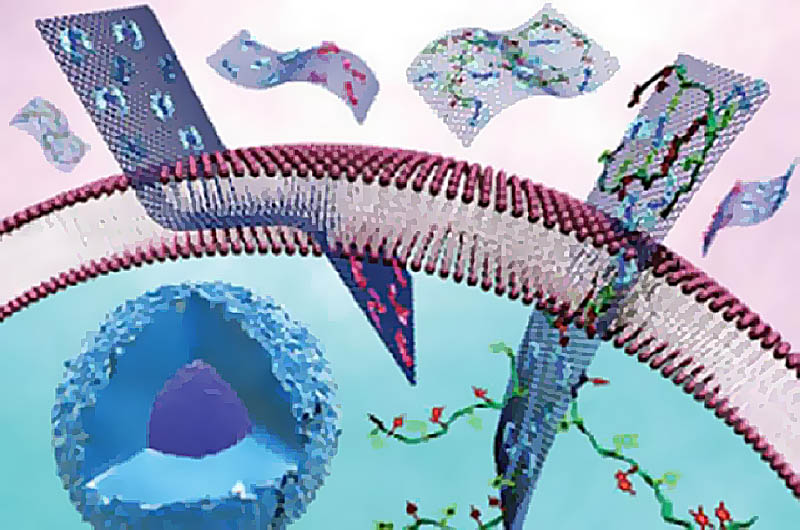
Manipulating the hydrophilic–lipophilic properties of graphene (blue hexagonal planes) through chemical modification would allow interactions with biological membranes (purple-white double layer), such as drug delivery into the interior of a cell (blue region) (Ref. doi:10.1038/nature11458 – A roadmap for graphene)


However, as most publications conclude, more pre-clinical studies and extensive clinical trials will be necessary to move this forward into the clinic to ensure patient benefit.

Towards this end, a research project led by Associate Professor Hanne Røland Hagland, is investigating the use of CealTech’s graphene as drug carrier for treatment of cancer, using cell models from leukaemia and colorectal cancer. The project is carried out at the Centre for Organelle Research (CORE), and is in collaboration with Prof. Lars Herfindal from the University of Bergen.

Ph.D. candidate Abdelnour Alhourani and MSc candidate Jan Lukas Førde are working on developing a graphene-based drug nanocarrier for dual chemotherapeutic and adjuvant metabolic drug delivery. Their work will focus on testing the cellular localization of fluorophore-conjugated graphene sheets of controlled sizes, and adapting appropriate biocompatible polymer functionalization to better understand the intracellular effects of graphene. The aim is to determine the capacity of CealTech’s graphene to enhance chemotherapy by shuttling adjuvant metabolism altering agents that are able to reverse chemo resistance. The viability of this approach is to be tested through multiples cell-based assays to monitor the cytotoxicity and metabolic shifts of cancer cells before additional testing in more advanced model systems.

For more information, please contact Hanne.r.hagland@uis.no or sales@cealtechdev.wpengine.com

The term ’processability’ can be defined as the ease with which polymers, whether neat or compounded, can be handled on the manufacturing lines (i.e., in production operations and equipment), where the end-user manufacturer is primarily concerned with the processing quality of the polymer-based product, and is sensitive to factors that may affect the materials’ behavior and variability during the manufacturing steps. Understandably, the selection of (polymeric) materials for a specific application has to take into account not only the material suitability, but also its processability. A material having all the required properties to achieve satisfactory product performance, but not easily and economically processible, is often discarded.


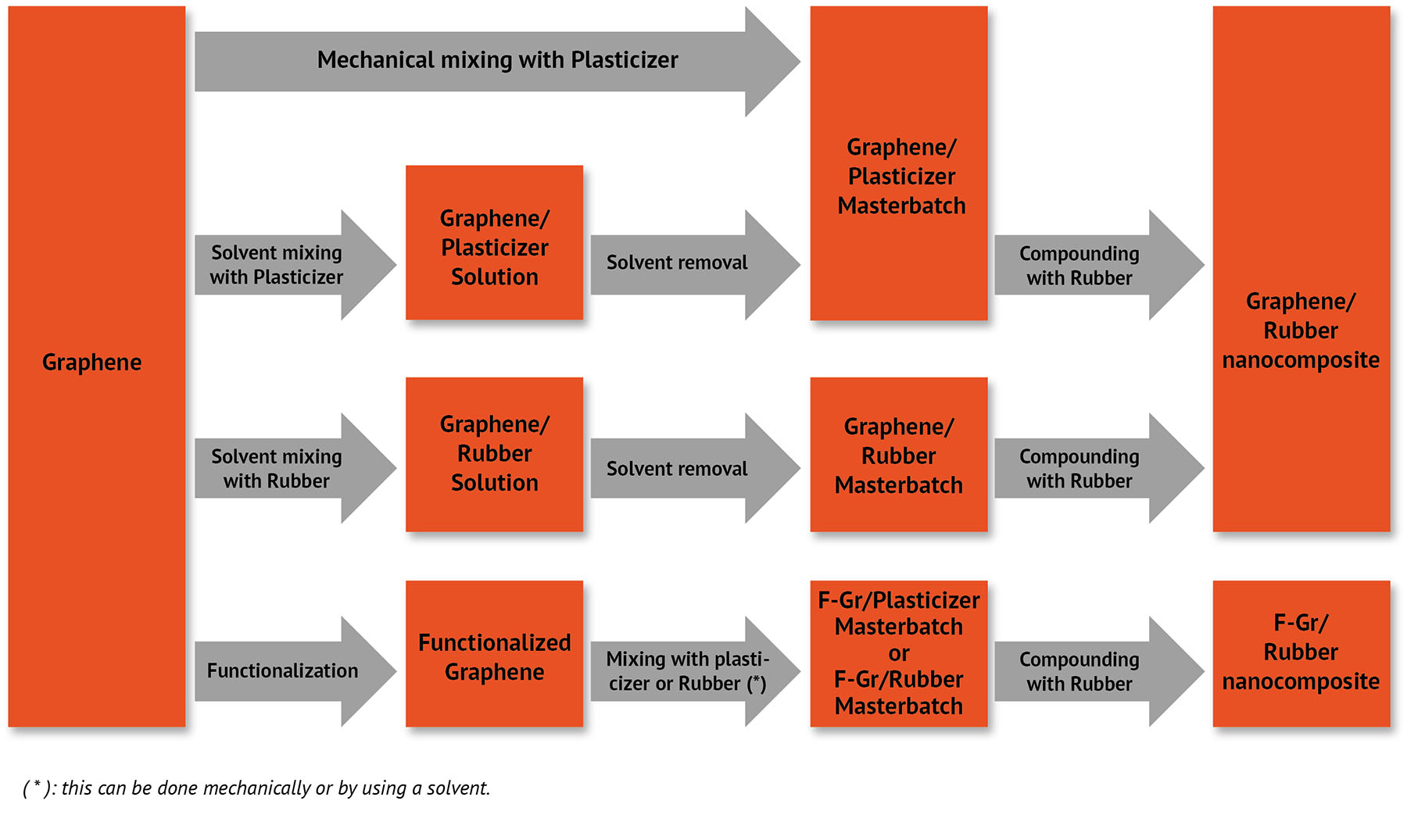
Similarly, graphene processability is often cited as one key technical obstacle to overcome in in order to enable widespread uptake of graphene by industry. More specifically, it is the requirement to achieve cost-effective, stable and homogeneous dispersions of graphene without agglomeration, while ensuring strong interaction with the polymer matrix (Source: Fullerex Ltd.). In this regard, CealTech has the ability to bring all these elements together effectively, as illustrated in the schematic below, which shows the example of a project where we are investigating the use of graphene in rubber material, where rubber can refer to natural or polybutadiene rubber.

CLICK FOR LARGE IMAGE

The schematic above shows some of the methods we are evaluating in this project, including direct mixing, either mechanically or by using a solvent; or by functionalization (for more information, refer to our article about ‘Graphene Functionalization’). Needless to say that it is paramount with a stable and homogeneous dispersion throughout the project development, to achieve optimum properties and performance.


For more details, contact sales@cealtechdev.wpengine.com You can also keep on checking our website as we will be publishing routinely further update on the progress from the project mentioned in this article.